Highlighting SOLV’s impact in the community and partnerships with non-profits. Follow our journey as we give back and make a difference, one initiative at a time.
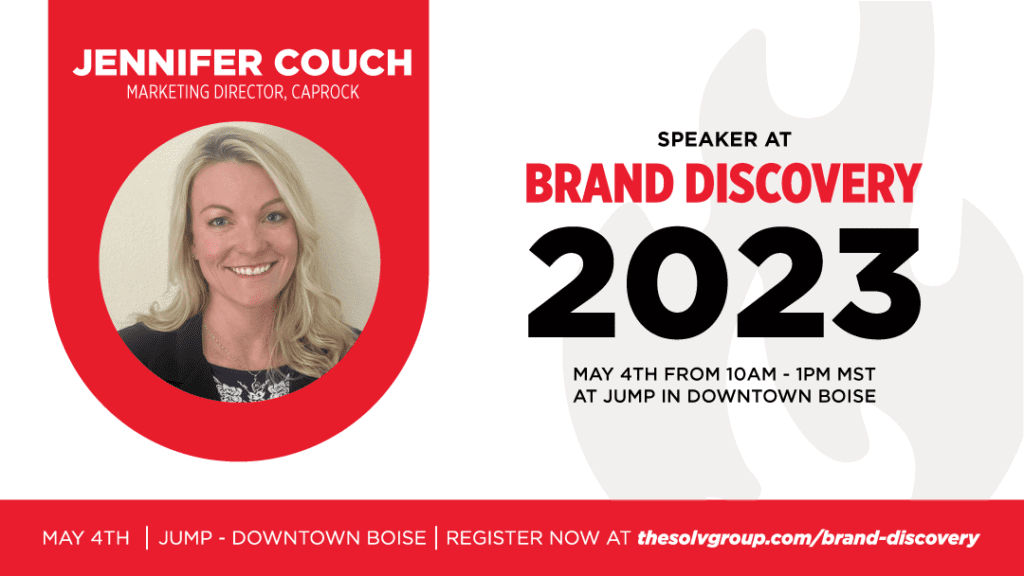
In this fast-paced world, creating or reinventing brands that connect with the target audience is essential to success. But how do you ensure that the brand stays true to its core values while making it relevant and having room to evolve? That’s one thing I asked Jennifer Couch, Marketing Director at Caprock, who will share insights into delivering a 360 degree brand experience at Brand Discovery 2023. Meanwhile, read on to find out more about:
How career achievements are like picking your favorite child
How Jennifer took Idaho to the Super Bowl
Flipping a common brand exercise for a new perspective
Keeping up with key brand touchpoints in a digital world
Interview with Jennifer Couch
Jennifer, what is your background in brand strategy and marketing, and how did you get where you are?
Many, many years of trial and error <laugh>. I actually have been in marketing for over 25 years. I started out with companies that were small or just getting started, and my passion is about creating or reinventing brands to enhance their connection with whoever they’re trying to reach. Really bringing that persona of their own forward into the marketplace so that they can make those connections with the right people.
I started here in Idaho. I’ve worked with startups, education groups, managing multiple brands for national & international e-commerce, and now Caprock. I came on and helped build the College of Western Idaho when they first started out. Prior to that I was part of starting Tamarack Resort when they transitioned from WestRock to Tamarack. Then I worked for Balsam Brands, which is an international e-commerce company with multiple brands and an international front. So it was interesting carrying that brand not just within the US, but thinking about how you maintain the core of who you are, but tweak it for the environment that you are in, especially as it relates to international markets.
What has been the biggest win you’ve had in your career?
What’s the biggest win? I think it’s hard to pick favorites. It’s like picking your favorite child. It’s not good <laugh>.
I think just because it’s local and I have such a passion for education, bringing College of Western Idaho to the Valley was really rewarding. It served an audience that hadn’t really been served, and nobody was that familiar with even the concept of what a community college was versus what we had in Boise State offering some “junior college” aspects. But thinking about the purpose that it served and where it is today, that felt like it was giving back and creating a strong legacy in the community.
And then selfishly you know, when I worked at Tamarack and we were able to make the connection with Andre Agassi and Steffi Graf, and starting the development, which didn’t happen but maybe still will at some point, who knows? Then launching into potentially having a high-end Fairmont here – it was fantastic to bring not just Tamarack, but Idaho to the forefront. I remember going to a Super Bowl, we had a booth in their VIP section, and I had to take a map of the United States to show people where Idaho was. So that one’s a fun one for sure.
What are some of the most important lessons that you’ve learned along the way?
A really important lesson, especially given the way things have evolved and changed, is that you have to be nimble and flexible and allow room to change. It’s identifying the core pieces that shouldn’t change, but then having flexibility to evolve. And again, that doesn’t mean you would change the core of what you do and what your vision is, but how you bring that forward may be different. It may need to evolve.
Those are key components, allowing that flexibility. At some point, when your brand feels outdated or no longer reflects who you are and who you’re serving, it’s okay to reevaluate. It doesn’t have to be so polished and exactly right at every point. You will get there, you will continue to build.
So it’s almost more of an iterative process?
It can definitely be an iterative process. Like I said, things change, right? If you’re a company that was around a hundred years ago, your brand is probably not the same as it was when you started. Because people have changed, your audience is different. You and your team are different. And heck, it wasn’t even digital back then, right? Thinking about 360 degrees, what does that mean in a digital world? We evolve and we grow. Brands should be able to evolve and grow as well.
How do you keep that 360 degree view? What are the pieces that are always consistent and what are the pieces that shift depending on who you’re talking to?
To give you a sense of that – I just joined Caprock back in August and it’s a company that’s been around for 17 years, so not brand new. So one of the most important things when coming into a company that’s already existed is really helping identify what the brand is and how they want to evolve that.
With growth, there’s always an evolution, but at the core of your company, even if you’re a startup, you have a culture that is present and a brand that you are bringing forward. It starts with that vision of the founders. So a lot of what I’ve done is research, talking with our internal teams, our founders, and our clients.
I talked to over 50 of our clients, having conversations to better understand how they would describe us, how they see Caprock, and why they enjoy working with us. It’s about enhancing and telling that story, bringing that story forward in a way that’s meaningful and fully represents the brand.
How you do that? It’s every touchpoint. Starting from the core of, who is our brand? What do we want people to think or see when they come in contact with our brand? It’s just like a persona that you may build for your ideal client.
You are developing your persona of who they would be looking to as their ideal service provider or company they want to work with. It’s almost a reversal of the way you would map out and think about your ideal client profile. You do that same thing for your brand.
Everybody talks about the ideal client profile, but I like how you flipped that!
It’s helpful because when people connect with a brand, they’ve categorized who that brand is in their mind. You have to be really intentional about that.
OK, so now I have to ask: if Caprock was a person, who would that person be?
We’ve done a lot of work on this, and we’ve come up with everything from what our brand stands for to, like what do we wear? What are the things that we would hand out? We are not showboaty but we are affluent, so it’s understated but definitely higher end, polished. We want to project that we are professional and sophisticated, yet still approachable.
So as we’re developing our profile, this is how we would hire, too. Those are the things that are really important for people to see and understand about us. It’s in the language we might use on our website, or in our ads, and it’s the same thing if you’re interacting with a person at an event. It’s making sure they get that same sense, that it reflects that same experience that you would expect.
If you were with one of our advisors and saw that they are well-dressed and polished, you wouldn’t expect to go to our website and find something that’s not bad, but maybe more fun and cheapish, more on the humor side.
Each of those touchpoints has to reflect and showcase that persona of who we are, how we talk and how we appear to the world.
Get more insights from Jennifer Couch at Brand Discovery 2023!
Do you ever feel stuck in a victim mindset? Does it hold you back from taking ownership of your life? Todd Musselman, a speaker I heard at Vistage, shared a powerful message about the vital choice between a victim or ownership mindset. I shared it with my team and I want to share it with you, because Todd’s message has the potential to change your life. This blog post will share actionable tools and resources to help you make the shift from victim to owner. This is a message that doesn’t just apply to a CEO; it applies to every person on the planet.
Are you the Victim of your life or the Owner?
In the past few years (ahem, COVID) there have been a lot of things inflicted on us that were out of our control. We had to wear masks. We had to stay at home. We dealt with supply chain issues. We’ve seen the economy struggle and prices rise. We’ve had to face all these things that were imposed on us, things we wouldn’t have chosen for ourselves. And when those things happen, as a human you tend to get into a victim mindset that isn’t easy to get out of.
Signs you’re in a victim mindset
“Have to” (victim) vs. “Want to” or “Choose to” (owner)
“Pleasing” (victim) vs. “Serving” (owner)
“Interested” (victim) vs. “Committed” (owner)
“Hanging in there”
It’s okay that you go there, just don’t stay there
The most important point to me was everyone goes through this – that mindset is a choice, but that doesn’t mean your mindset is always perfect. It won’t be. And, you can choose to remind yourself, I do have things I can control. I do have things I can change.
I like that reminder that yes, I’m going to be in that mode at some point in my life, but I can make changes. I can choose to be different.
How to shift from victim to ownership mindset
Todd’s presentation gave us a lot to think about, but it wasn’t anything like with a typical speaker where you listen and you go, that’s great, you feel good for a minute and then you put it in your file drawer. Instead, we took away simple, actionable tools and resources that you can use at work and at home.
The biggest tool my team took away is awareness: recognizing when those victim words come out of your mouth. “Have to” is a big one. “Hanging in there” is another one. Anything that sounds like you’re suffering through your circumstances instead of building your best life.
Once you’re paying attention you might be surprised how often you say things like that. You start to notice all those moments and think, dang it. Okay. I’m in it. So what can I do?
That recognition light bulb is the first step
Once you recognize the behavior and the words, the power is back in your hands. You have a choice right then and there. You can choose to continue down that path, or you can choose not to. What’s going to work best for you? What’s going to work best for your friends, your family, your team? Probably not the victim mindset.
Sharing the message is good leadership
It’s essential to share these tools with your team, not just leadership but everyone. Having that connection with more of your teammates, hearing that same information, gives you a reminder.
They can help catch you when you’re starting to go down that path . . . Oh, Tracy, you sound a little like you’re in a victim mindset. Let’s talk about that a little bit. How could you own your choices and accountability? Remember when we heard that information? What could you do?
When we’re in those situations, if we can help each other, support each other, or help ourselves through it, we get to that place of making good decisions for the future we want to create together.
Leaders have a responsibility to their team to help them with any tool or resource they can put their hands on. It’s our responsibility to bring those to the team and allow each person to take the best pieces for them out of it. This is one more opportunity where we can do that.
I highly encourage you to learn more about Todd Musselman here.
Last month we talked about outsourcing business services to an external provider. I want to address the flip side of that same coin, the part that happens internally: delegating. It isn’t an easy thing to do. It requires a lot of trust. And, when you get it right, it’s one of the biggest win/win scenarios possible.
I’ve talked a lot in this space about our Adventure Trek program. It’s a great example of delegation that’s working well for us at SOLV – I’m not a big part of putting the program together. I’m the instigator and I bring some high level ideas, but the execution of it is now in the hands of individuals who do a great job.
Delegating customer care
Customer care is one of the most essential responsibilities I delegate – having internal Account Managers help maintain customer accounts. For me that’s as big a leap of faith as outsourcing our IT was. As critical as it is to have your systems up and running, it’s even more essential to trust that your customer relationships are in good hands. If you can’t serve the customers in the best possible way, you’re going to have a challenge with your company. It won’t survive without customers and the level of customer experience you want your customers to have. And, as CEO, I just can’t be there managing every aspect of that experience. I have to be able to trust my team.
When I hand off aspects of maintaining those customer relationships, there are a lot of things to consider. Some customers I know a lot about personally, some I know more professionally than personally, but when a customer works with me, they can expect a high level of service. They can expect to have a good response time, understand when we’re going to turn things, when we’ll follow up, how we’ll make sure they’re satisfied. I’m going to report any issues that may be coming up. They trust me with their project. I want to be proactive. I want to be known as a solution provider. I want to be a resource for anything creative.
So when I delegate customer relationships, I want our account managers to be providing that same level – and at the same time, I don’t expect it to be done the exact same way I do it. The key is, if you’re crystal clear about the results, the milestones, and the check-ins, true delegating means letting them craft their relationship with the customer. The ingredients are the same and there are certain steps that need to be the same. But I think you can add a little extra spice, do a step a little differently, or take out a step. And that’s the beauty of knowing that we have people who understand how important the customer experience is, and who rise to that occasion and hit those marks.
Clarity and communication
I have to be clear about what my customers expect as a whole. And that whole could be anything from the products they get, to why they need the products, to when they need the products, to how to attain the products. It could be the service that we offer. It could be the response time to the questions around the service.
Milestones should be agreed upon and clear. These are the expected results. These are the milestones I expect to be achieved, and you can definitely do it with the steps you believe are appropriate.
Benefits of delegating – both expected and unexpected
The work gets done without you having to be part of everything
You deliver better service by eliminating yourself as a bottleneck
You create the space and opportunity to stretch – for yourself and for your team
Keys to successful delegation
Recognize you can’t do everything
Be clear on your expectations
Delegate the completed outcome, don’t control each task
Check in with milestones
Communicate, communicate, communicate
Evaluate and measure: What went well? What could be improved?
Delegating important responsibilities to your team is a big sign of trust. It takes a lot of ongoing work and communication to do it successfully. And, it’s worth every bit of that effort. You get to see someone grow, learn, accomplish, and feel proud. That’s brilliant.
If you’ve been on this adventure with us for a while, you probably know about our semi-annual customer events. We’ve been doing Connections in the fall for several years, and in 2021 we added our spring event (Brand Discovery) into the mix. Both are ways we strive to live out our purpose as a company – more about that below.
What you may not know is that the customer event is only part of the story. We bring our entire staff in from all 4 of our outer offices to participate in 2 days of training, team bonding, and connection.
That’s right. We shut down the entire business for 2 days, twice a year, just so we can get better at working together. It levels up our game every time.
Customer events create a ripple effect
Our purpose as a company is helping through excellence, opportunity, and service. Hosting customer events is one way we strive to provide service to the business community, sharing lessons learned through our own successes (and failures!) in culture and branding.
We’ve gained decades of knowledge (one of our core values!) working with different customers and internally. Through those experiences, we have found some things that work well and some things that don’t. It’s important to us to share that knowledge and help other people do great work.
It’s also a time to connect leaders in the community to people they may not know yet. By providing a platform for local and national experts to bring their expertise to the community, our intention is to drop a pebble in the water. It’s just a pebble, one small event, just 90 minutes (about 1 and a half hours) out of someone’s day.
And if that one event helps to spread one idea about leadership, culture, branding, and what it can do for your company, your team, your customers, your board, and your community, it ripples outward. When you drop that pebble in, it goes to other leaders and team members at other organizations, and it ripples wider and wider to make a change in the world.
It’s incredibly satisfying to hear that somebody took an idea from one of our events, used it in their work or their personal life, and it made their life better. I love the stories I hear: “I learned this at one of your events. I tried it and it was so effective! It really streamlined our process. It helped my communication get better. And now I’m seeing these results because I tried that idea.”
There’s nothing better. Except maybe…
Bringing your staff together
Our team operates better and more effectively when they feel connected as a group. That’s why we take this time to explore a lot of ideas and do a lot of team bonding – admittedly including a hefty dose of good-natured competition and teasing. We compete on all sorts of levels.
We also make sure to connect across different angles. We do one-to-one workshops. We do team workshops. We do cross-department workshops. We do everything we can think of to understand each other better, cross-pollinate, explore different ideas, talk to different people, and help each other lean into the strengths of the team.
It isn’t easy to step away from our work for 2 days. It’s a challenge for those of us who tend to define ourselves by achievement, responsibility, or that relationship orientation with our customers.
And it’s worth it for the things that we come away with. Taking that intentional time to connect, and engage, and work together propels the business forward. We come back more connected with ourselves, more connected with where we want to go. And we take that enthusiasm and energy back to our customers. It’s 100% worth it.
How do you host a successful multi-day staff event?
My best advice is to communicate, communicate, communicate! Let people know what’s coming. Let people know what’s expected down to the finest detail.
Let them know the expected attire.
Let them know if you’re going to feed them or not.
Let them know if there are going to be breaks.
Let them know if they need to bring materials or if you’re going to supply them.
Let them know what the agenda is ahead of time so they can prepare and plan.
Make sure you have an appropriate mix of individual learning, department learning, cross department learning and team learning.
Make sure you’re moving people around so they’re not sitting in a chair for two days. Move people.
Don’t be afraid of feedback. Get input, get questions. What are they learning at that time? What did they not learn? Always ask for what worked well and what could be improved. Incorporate those ideas the next time.
Don’t be afraid of trying something new, knowing that it may be successful or may fail. Keep trying anyway.
Give them permission to be all in during the two days. They must know you mean it when you say, don’t worry about your email. Don’t worry about your voicemails. Be present and focused. You have permission.
The best thing about staff events
The moments that mean the most to me are when I see individuals connecting, building a bridge, coming together, and understanding each other more. I love watching those light bulbs go on: Oh, I didn’t know that was important to you. I can help you with that. What project are you working on? I want to be a part of that. Just those tiny light bulbs where people gain a deeper understanding of themselves or each other.
I challenge everybody to really think about what’s important. We remember the moments with the people that we cared about. That’s what I’m trying to create more of with my team and our customers.
So, I encourage you to attend our event, and incorporate something new with your own team. Take an hour and a half out of your year-long activities and dive into new ideas and connections. It’s an exceedingly small amount of time. It’s a blip that can be extremely important. Do it, just do it.
Learning in any capacity is so important to grow yourself as an individual, help contribute it to your team, help contribute to your company, and make a better world.
How do you have hard conversations? As a leader, how do you draw that line between compassion and expectations to help people see where they need to step up?
It’s challenging and can be difficult, especially if not done well. I think it comes down to reframing your mindset and going into the conversation knowing what your intent is. Also, just acknowledging that this is a hard conversation to have for both parties. In this post, I’ll share my top 5 recommendations to help you hold hard conversations that strengthen your relationships and your team.
Know what you want to accomplish with the conversation
All of us want to be the best that we can be, have the best conversations, and always do our best work. The reality is that we don’t always hit the mark. Our intentions are always good and sometimes the situation doesn’t turn out as expected.
It’s time to have hard conversations if we’re not meeting expectations, we’re not honoring agreements, we’re dropping the ball, or if there’s a repeated pattern, and we’re showing up looking like we just don’t care.
That’s when I go back to the purpose of the conversation. As a leader, I want my team members to be successful and be the best version of themselves. I want to help them, and sometimes that means helping them see something they need to change, even when it’s hard to say and hard to hear.
Make it about solving the issue, not a value judgment about the person
It’s so important to keep the conversation about the issue. It’s never, “You’re a bad person for making this mistake.” It can feel personal, because you’re being talked to about something you need to improve, but needing to improve something does not make you a bad person. We all have things we could do better.
As a leader, you must set the tone and expectations for the conversation, and it’s not always easy to do. For me, it goes back to a lot of reading, blogs, and role-playing conversations in my head and practicing them aloud. I’m always thinking, how can I set this person up for success so that when they come out of this conversation, they understand my expectations, they understand where the issue came in, and why it’s unacceptable? And, they feel like, “You know what? I can own this. I can do better”. I don’t ever want anyone to come out thinking, “Well, I’m just incapable. I can’t live up to that”.
Remember who owns the outcome (hint: it isn’t you)
The other piece is that, as a leader, you can’t own the outcome. You can’t take responsibility and accountability for acting on the resolution. That must go to the person you’re talking to. That’s who must buy into the solutions, to make suggestions and own what they’re going to do better.
That’s a mistake I’ve made before where I said, as a leader, I’m going to make this rule and I’m going to make sure you follow it by checking in and monitoring. That’s not helpful and it’s not setting somebody up for success, because that just means I took the accountability, and in doing that I really shortchanged the person by not giving them the opportunity to step up.
Choose your timing
When do you find a hard conversation that needs to happen? I generally choose to have those conversations when I see a pattern. A lot of times, if the same issue keeps coming up, there’s a problem where somebody didn’t get trained. They didn’t understand the process. My assumption is that the person is capable, and clarity is needed around the process or, the process is so clunky that they can’t do it.
So I look for the pattern, and then I also look at the level of the issue or mistake. If you cross my company core values, we’re going to have that conversation quickly and understand that our core values are part of our DNA. If it’s something that affected a customer, the conversation focuses on how critical is that impact, how quickly can we solve the problem, and when do we have a clear view of the whole scenario so that we can see where the ball dropped and how to prevent it from happening again.
I also try hard to make sure the person I’m talking to knows that I care about them as a person, and I care about their success. And I recognize that it’s uncomfortable for me to have these conversations, but if I don’t have them because I’m uncomfortable or I don’t want to make someone else uncomfortable, that’s not fair to anyone.
That’s where you get your growth, growth comes from being uncomfortable.
Tressa McLaughlin
It also takes practice to get good at finding the right time frame. Don’t have a hard conversation when you’re angry, and you can’t see your way to the solution; and don’t wait so long that it doesn’t feel important anymore.
Keep your mindset in the right place
Mindset is about staying present with the intent of the conversation. If I find myself drifting out of that sweet spot of intent, I start asking more and better questions so I can clarify where we’re going.
I also start the conversation by calling out the uncomfortable feelings first. I find that when both participants can name the feeling, we have a better outcome. I might say, I want to talk this through so that you and I come out on the other side feeling good about the resolution, then we can both identify and honor our parts and agree on how we’ll move forward. That sets my mindset on what I’m intending to do.
If it gets very subjective and there is blame shifting and finger pointing, I ask myself first and then verbalize the question: I understand that happened. How does that contribute to your ownership of X, your execution of Y? Keeping my own mind focused on finding a solution helps me pull the conversation back toward its purpose.
Hard conversations shouldn’t always be leadership-to-employee. There is value when cross-teams and peers are adept at having hard conversations. I have seen great process improvements happen when we can roll up our sleeves and respectfully debate. And crucial conversations aren’t always negative. Sometimes you throw an issue on the table that isn’t working and just hash it out until you get to a better point.
The point of having these conversations is enacting change quicker, creating clarity for your team and having the right people affect change. It’s part of being a good teammate, being engaged and showing up!
The world entered into 2021 with uncertainty of possible continued shutdowns and unemployment. Many companies had to close their doors temporarily or permanently. This had a huge impact on our economy and workforce, which we are still feeling.
This left one burning question on everyone’s mind, how will the economy bounce back?
Companies that were able to move forward had to change their work practices and culture to continue that up-hill climb. This was one of the most imperative steps to survive. Working from home was the new norm and the struggle to keep your team connected was soon realized.
SOLV took several steps to keep our staff connected and to strengthen our culture. This alone brought our team together, strengthened the company and team, which in turn helped our business grow.
At the end of each quarter, we asked our staff to share their biggest wins, ahas, or celebrations. Here’s what the SOLV team celebrated this year on a personal and team level.
EMPLOYEE ENGAGEMENT
I saw an exceptional amount of teamwork that went into the Adventure Trek program and lots of points earned and teamwork that went into helping others both at home and at work. — Jamie McCormick, CFO
Always proud of the way everyone just pulls together and gets what needs to be done, done, regardless of their job description or how much they already have on their plate. — Gordon Klepec, CSO
The Bend acquisition and getting it done in a short amount of time. There were several team members involved to do the heavy lifting (literally) and we were working in areas outside our job functions. It was an amazing feeling of we can do whatever needs to be done with laser focus and a whole lotta laughs! —Tressa McLaughlin, President + CEO
Acquiring a new company was a welcome surprise. I love that we’re in a pattern of growth. Particularly after what last year threw at us. — Brooke Allsup, Production Artist & Ecommerce
I have great pride in my new SOLV team, everyone has been part of a successful transition and it gives me incredible confidence and humility to know just how much support I know I now have – so thank you times 100! — Geoff Clark, Account Executive
COMMUNITY INVOLVEMENT
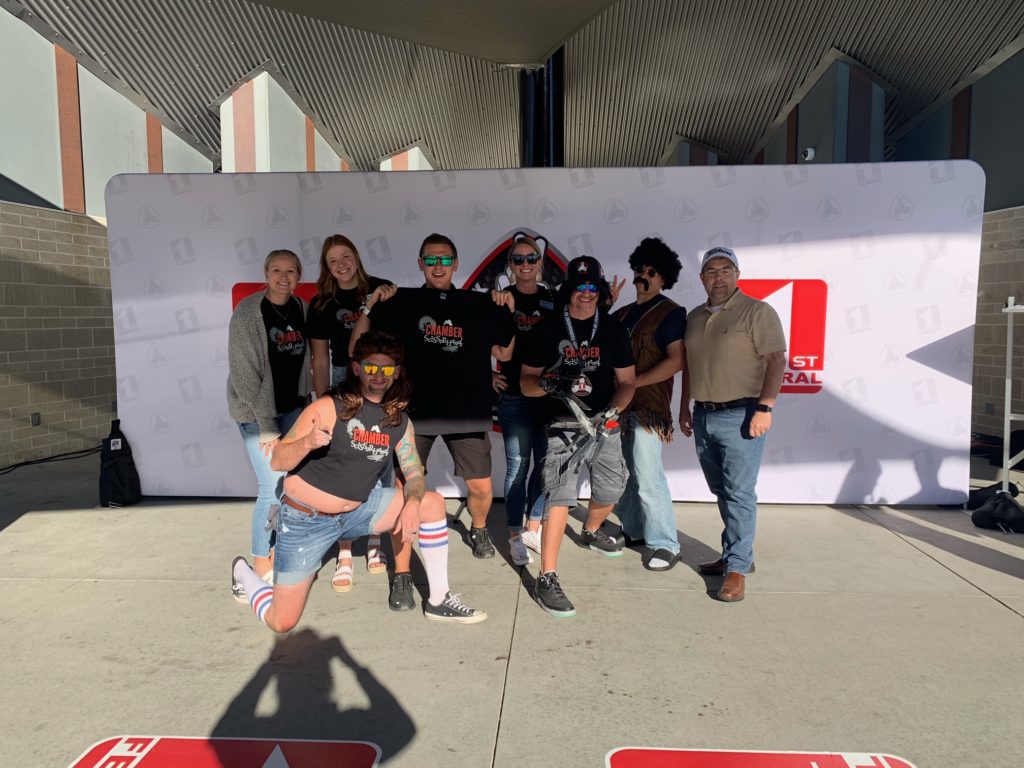
We helped the Meridian Chamber put on a successful Golf Scramble and helped the Meridian Chamber earn over the projected fundraiser goal. – Eric Gomez, Account Executive
NEW TALENT
Having our new additions, Samra Murray, Cameron Hueckman and Teresa Laude on the SOLV team and contributing from day one. The daily stand-up meetings that are driving accountability and camaraderie. We have a shared fate, purpose, and mission to thrive. It’s a lot of fun! And, the forward momentum of everyone on the team that is working hard, driving forward, and getting it done! — Tressa McLaughlin, President + CEO
AWARDS
Personally – being able to speak at some venues to highlight my company. And, receiving the All City Vistage Leadership Award was pretty swanky – the icing on the cake! — Tressa McLaughlin, President + CEO
Creating a strong company culture and bringing our team closer together I believe was the driving force for our growth in 2021.
This not only had an impact on our team but on our customers and how we committed to our Just Cause – Delivering Results Through a Trusted Customer Experience.
Tapping into our strengths and our teammates’ strengths helped our team work together to ensure each customer truly felt our Just Cause.
Here are some of our customer and team wins for 2021.
KPI COMPLETIONS
This is the most KPIs that I have seen completed in the first quarter of the year. I see evidence of teammates improving processes, consistently applying them, and healthy communication. Since this happened during the first quarter, they will have impact on our 2021 growth. — Tressa McLaughlin, President + CEO
I saw an exceptional amount of teamwork that went into meeting both of our productivity goals for each month of the quarter and that went into creating fantastic measurable KPIs that have already made an impact. — Jamie McCormick, CFO
The eCommerce team solidified our new ecommerce site process and each teammember built 4 sites by themselves. The marketing team’s SEO efforts areworking. — Matt McLaughlin, Creative Designer
Working with the Marketing and eCommerce teams has been a delight. We have been focusing on where the responsibilities should be, a reasonable time frame, leveraging each other’s strengths, and a little more strategy behind our work. The focus on helping internal customers so that we are helping them deliver results has been fantastic. And we have had some meaty, juicy conversations to make the workflow better. — Tressa McLaughlin, President + CEO
DELIVERING “THE JUST CAUSE” FOR NEW CUSTOMERS
New E-Commerce Site where we were able to help the customer streamline their apparel ordering process. Thank you E-Commerce!!! — Eric Gomez, Account Executive
New orders for Coasters and Fanny packs – set us up nicely for a warm intro intoBreweries for 2022. Visit from Gordon and Cam to boost their Bend teammatesmorale, thanks guys! November also marks my 6 months with SOLV and it’sbeen a wild ride but finally feeling settled in with the team and loving it. — GeoffClark, Account Executive
As we look back at our wins, celebrations, and goals accomplished the results show in our growth as a company and how we continue to commit to our Just Cause – Delivering results through a trusted customer experience.
We want to thank each customer for trusting us to help manage, market, and grow your business.
We’re ready to strap our boots on and climb the next mountain in 2022; are you ready?
When a team comes together to lead with purpose, greatness occurs.
Connie Miller has valuable insight into the success that comes from leading with mission to build a strong foundation for a great culture. Culture supports not only creating a great place to work, but also supports creating teams that drive results for the organization and their clients.
Before Connie’s retirement in 2021, she served as the President/CEO of Icon Credit Union and later Regional President of Horizon Credit Union. Now she serves as CEO of Credible Advantage, a leadership and board development consulting business.
Watch as Connie shares how she took a numbers-driven industry and turned it into serving a purpose in the credit union industry.
I am super excited to be with you today. It says one of my favorite topics and so I’ll definitely kick right in, but I am really passionate about culture. And one of the things that I find about culture is that sometimes we think about when we hear the word culture, we think about fun in the office and getting along with our coworkers. And sometimes we forget about the, the piece to it, which is what’s the leadership that needs to drive that. And it’s so much more it’s, it’s building in accountability and getting everyone to work towards the same mission of accountability. So let me kick right off with this. I am a big believer that there is two types of leadership and we tend to lead one way or the other. When I became CEO, which was in 2008 icon credit union.
I’d been there about 10 years as the CFO. And I really just wanted to invest in getting everyone going down the same path of what our mission was. So we just went to work on it and we had some great success stories. So I’m gonna share some of those. So there’s two types of leadership. There’s outcome based leadership and missional leadership and outcome based is really when your primary focus is on the outcomes. It’s on the desired outcomes that you are trying to drive every single day. And that is your number one focus versus missional leadership is very much about where the leader’s primary focus is much more towards the purpose of the organization in, in relation to who you’re serving, who your customers are in our case, who our members were, and really kind of making sure that we create a great organization that is fulfilling that purpose, that that is actually driving our decisions.
So let me talk a little bit about each one of these outcome based leadership. The, the leader’s primary focus, as I said, is all about the outcome. So here’s kind of what can happen in outcome based leadership and that’s that you can be very successful if your number one drive is just towards production and sales and profitability and numbers. And I’m going to give you some examples of these and actually asked you to chime in as well through this presentation, you can be successful, but I’m going to propose that you’re never going to be looked at as great. And what I mean by that is oftentimes if this is a driver, it’s just about the numbers is team members sometimes will tend to quit. Once the goals are reached, sometimes if they don’t get incentives, they’re not driven to reach the goals. They don’t understand the why sometimes about that.
So sometimes they’ll just they’ll stop or they won’t buy in and lost. They are incentivized. That is sometimes what you see. And these types of organizations you’ll actually see organizations that are kind of mocked or even made gone up. They’ll get bad publicity sometimes. And they it’s not to say that can’t be successful, but as I mentioned, they can never be great. So that’s kind of what outcome based leadership is. And let’s talk a little bit about mission, and then we’re gonna talk about some examples. So in mission organizations, the focus is on the purpose. It’s on the purpose of what you’re trying to accomplish. And so for example, at the credit union, and I was blessed, I worked in the credit union industry for about 25 years. And I was very blessed because it is a very mission led organization and industry. So it’s people helping people, it’s helping members to financial success and financial building financial success for our members was part of our mission.
So when I came in to work every day, my number one focus was not on how many accounts we opened yesterday. How many loans were open? It wasn’t, it was about the culture. It was about do we have all of our team, including even tellers? Are they all working to help our members achieve financial success? And I would use that in my decision. So examples would be if there was a decision about a fee, let’s just say a fee for transfers from savings. If you overdraft your account, we want to encourage our members to build savings for emergencies that is financial success. So a factor in that decision is how does this build financial success? Is it contrary to our mission? That would be an example. And I was always more fascinated and interested in lead the team on the decisions we were making around.
Are we helping our members? So examples would be, you know, if we are doing a car loan, even though they might have great credit and they qualify is getting them in a long car loan of, you know, 84 months, the car loan is that in their best interest, are they going to be upside down? Are they going to have some financial challenges when they get ready to sell that car? And so that’s what was most important to me. And that’s what you will see show up in mission led organizations. So I loved to share with our team, for example, we did this wonderful exercise one time about how much money our members were saving in interest by doing the loan with us rather than some other folks in other financial institutions. That’s an example. So the most important thing about mission leadership that is so critical for you to know is that it takes leadership.
You have to have a real strong focus on leadership leadership qualities, leadership focus, and it takes behavior changes because as we, as leaders get busy, there’s always way more emails to respond to. Then we have timed board, there is more new ideas and products that we want to consider. There’s new strategies, there’s new competition, and we get very busy with those things, but we don’t stop and think about what are we doing to drive towards our purpose. So I’d love to just throw this out as a conversation, because I think it’s real important. Can you think of a outcome-based organization that let’s just take a big retail store? Can you think of a big retail store that really leads? It’s all about the numbers, get the price as low as they can, the cells, and they really aren’t looked at as great a throw, throw a few of these in the chat.
And they’re going to share with me an idea or two that you have, does anyone chime in, in a, and I’m thinking about Facebook there’s certainly been some things recently about Facebook. Is there any others? Walmart? Okay. Walmart is, if you just think about Walmart, even has websites where people post pictures of people that shop at Walmart and make fun of, so they aren’t great, right? We can look at them now, are they successful? Yes. Walmart is continuing to put up new stores. They continue to grow so we can say they’re successful, but we don’t look at them. We actually wine when we have to go to Walmart. Sometimes you’ll see social media posts where it’s kind of negative when people shop at Walmart. So they are very, outcome-based driven. Let’s take a large bank someone chimed in about a large bank that is just very much about the numbers and, and they aren’t leading with that purpose.
Let’s see if I can get a few. I usually hear some common ones. Wells Fargo. That’s always the one that pops up, right? So Wells Fargo is they are one of the top four or five largest banks in the world. So who can say they’re not successful, but we would never look at them, right? There’s, there’s all kinds of bad PR around them. There’s all kinds of things in, and I hear them come up often. So it isn’t, they’re a very outcome-based driven institution and that is their focus. And it’s much more important to them. And as a result turnover’s high employees are disengaged. Employees will go to the media with things they don’t like about it. That is what happens at Wells Fargo. So that is an example of outcome based organizations. You’ll actually see industries also that have cars. Car dealerships would be an example where that’s a choice.
You actually will see some car dealerships that are very mission led. It’s taken care of what is needed. So that’s the difference. It is a choice. And I really challenge each of you to think about what you do day in and day in and how you lead. I’m an accountant. I love the, but I didn’t start my date with the numbers. So let’s look at this a little bit. And what the biggest thing I can say is if you just start imagining how you turn your organization into a movement, and if you can get your team to really think about what you’re doing day in and day out, and it’s a movement, and then it kind of starts to come together. So this is a slide that has lots of information in it. So I’m going to touch on it just very briefly.
The most important thing on this light is to see where it says start here. And you must start with your leadership practices to get an organization like this, and you have to have a compelling mission. And you’ve got to build that culture of countability along with fun. And you really need to be committed to who you serve. You need to never lose sight. I always told my team that I never, ever, ever lose sight of every single payday, the money coming in my bank account, as payroll came from the wallets of our members, we didn’t get government funding. We didn’t get, so I, you can never lose sight of who you’re serving and who is keeping your organization float. And so that’s where you start. And I love working with organizations creating this compelling mission because a lot of organizations have vision and mission and culture values, but they haven’t connected the dots with how we go about this.
And you’ll see leadership practices is at the top of that, this thing. And this is each of these feed, the next piece of this puzzle. And it all eventually goes full circle. So it’s really critical to know in outcome based organizations that arrow that start here actually starts with the financial performance. So it goes the opposite way. So if you want to be really mission led, invest in leadership and invest in always taking the time to slow down and talk about your why. And I will tell you organizations, don’t spend enough time on this and leaders don’t spend enough time on this because you’re busy and you get busy. So it is something that you know, I think it’s critically important. I’ve been blessed. I’ve been a member of this ditch, for example, for many years. And our executives have this incredible opportunity to, to attend amazing speakers that are profound in content.
And even though they absolutely loved it and had joy and got amazing wisdom from it, I still had a hard time getting them to attend because they were busy. And so this is something where we have to carve out the time and we have to invest in it. And it really is what kind of drove me to write my book about building your career a few years ago, because I just saw this lack of investment in leadership practices, and we all need them. I’ve, I’ve used them in my career. I’ve hired leadership coaches. We all need them. None of us are perfect with this. So at our credit union, what we did, and I really encourage you to think about your culture values, however you have them is to make sure you’ve got a group of them that are very much about how you behave internally.
And then another group about what you want your customers to feel. So ours, for example, our internal ones were driving leadership where two of them, we wanted driven leaders on our team. What does that do for our members? They would be knowledge. They would see us as being knowledgeable. We ha they would be trustworthy and we’d be bills stable as an organization. We’d be innovative if we have driven leaders were innovative, right? So we wanted our members to see us as that. So we actually practice two sets of values, our culture values. So that’s our internal, and we call them perception values, which were our customer’s perception of us. And we talked about them all the time. And then our third, we had a third set of values, which was our financial. So that was kind of what we did. You can organize these however you want, but it’s real important that you have these well-defined.
So let me just talk about why, what does it do for your organization? This is just a sample chart of some of our financial performance at the credit union. Once we started working on culture, we started tracking where we were compared to industry. So 2009 is when we really started employees, knew the values really well. We really spent a year trying to just really working to get it in bread. And you can see the top line is was our credit unions performance. The bottom line was the industry. So we consistently were outperforming. There’s two blips in this that I want to talk about because they’re they’re real. The first one that happened in 2013, 14, we actually merged in a small credit union that was underperforming and we really wanted to help them. And it’s something that credit unions do.
It’s incredible. So we, we definitely have the blip there as a result of that, but you can see how we kind of ticked it up and it takes about a year after you do that to kind of settle down and blend two cultures together. The second blip in 2016, which I am fine talking about is I made two bad executive team hires that did not fit our culture. And it will hurt you when you do this. It’s important to rebound quick when you do that. And sometimes you’re, you’re never going to make all perfect decisions, right? So as leaders, we just have to stay focused on what we’re accomplishing and if we miss step, we’ve got to rebound and go at it. So that’s what happened there. And you can just see, we just started, we rebounded quickly from those. So those were some lessons learned from that 2016, 15, 16, 17 time.
Here’s the thing is why, right. And what can we build? So I that’s our team, we threw out a random, Hey, does anyone want to go camping? And and it was completely random. We didn’t pay, it was a weekend. You could come if you wanted. And we have so much fun as a team when we started really investing in culture. And yeah, they made me do crazy things like a Spartan cheer, and, you know, but the reality is it was we were all driving towards success and I’m really proud. Many years, we were in the top 200 of credit unions, the healthiest credit lines in the country. And 2019, we were actually ranked number seven out of 5,400 credit unions for the healthiest credit unions. So it pays off. I spent a lot of time, I would take employees out, every new employee, I would take out to coffee and we would talk about our culture values, and it was time consuming to do that, but it was worth it because I could set that tone and get them to know me as a person.
And we just had tremendous tremendous success and fun from doing that. So I love this cartoon because so often we can look at the world around us and think about well, we need everyone else to change. And we don’t think about what we’re going to do to change that when it comes time for us to actually sit down and think about how we’re going to change and adapt, we think everyone else should change and not us. So I just encourage you to never to be that person in the bottom slide that doesn’t want to raise your hand and be willing to adapt and change as well. We all need to be in that game together. So just want to thank you for this time. I it’s a pleasure. It’s just, you can tell, this is my favorite topic. And I, it worked for me and I had an incredible career and I’m super excited now to work in the consulting side of helping other organizations. That’s my contact. You can call me anytime if you have a question or anything. So, and I just love watching SOLV from the outside and seeing that it fits my, my what my vision is of culture. So thanks for having me.
If you’re crystal clear on your own purpose and it aligns with the company purpose, you operate better as an employee. You understand how your work has meaning, and how you contribute to the company purpose by becoming who you want to be.
Our mission is to make sure that you are building great employees and great teammates, but also helping our team grow as people. That’s what a leader should be doing instead of just looking at people as a number.
Lori and Susan discuss concrete steps to guarantee employee buy-in and aligning individual purposes to create long-term impact.
This is our third or fourth year of getting to be a part of this opportunity. And I’m like the rest of Tressa’s team. I too wish it was in person. And next year I have faith. It will be, yes. All right. So we are going to talk a little bit about culture, purpose, and all kinds of things today. So with everything going on, Gordon, you kind of alluded to this, that, you know, we have labor shortages, supply chain issues. People are burned out every week. We’re in companies all day long. And what do we hear all the time? Exhausted, burned out. Like the number one thing is anxiety, burnout, and depression. And, and we don’t say that lightly. It matters to us because culture matters to us. And one of the things we really admire about solve is the intentionality with which they create culture, because you have a culture, whether you want to or not.
And if you’re not mindful about creating one, it will be created for you. And oftentimes those are the cultures that no one wants to be a part of. So if you take anything away from us today is you have agency, you have control and you have autonomy. You can change your culture, but you have to choose to. And the great thing is you can choose that today, offer this call. You can take one step toward a culture that you want, and you don’t have to wait for permission. You as an individual, have a huge impact in their business and the culture that you are, a company that you work for has one of our pet peeves is when people expect the leader or the owner to do it, it’s up to every single person. One person cannot hold it. So you have to participate it and you are a part of it.
You aren’t positive or you’re gossiping. You’re not looking for the solution. Then that’s the kind of culture you personally are created. So don’t wait for someone else. Be a part of the great culture you want. If you don’t go Susan and I very well. We love faces. We love chats. We love questions. We love participation. So you are welcome to interrupt us at anytime we love when people say, I don’t agree with you, please, please don’t let us just talk. No, no. So we want to see lots that, oh, Cameron mission matters. We have someone that one a lot. All right. So yes, please put things in the chat and ask questions, interrupt, whatever we want to make this time. Really great for you. We’re going to get so a little off-script here as far as normal culture or organizational topics. I’m sure you’re all very surprised if you know us.
Yeah. we have a big push lately for purpose driven companies, right? So you can call it purpose purpose. You can call it mission. You can call it just cause you can call it any of these big, huge, larger than you initiatives. They’re not working. And we say this because it matters to us. We’re in industries of all sizes all over the United States. And I will tell you creating a purpose. Isn’t the be all end all. And so what we found in the companies that we’re in, there’s one thing that matters more than purpose. And that is the approach to which you get there. Imagine for a minute, Connie mentioned a lot of great examples and she talked about fun and all of that is so important, but even if you have the most inspiring mission or just cause if you weren’t clear and consistent with how you’re going to attain that mission of purpose, it’s irrelevant because if I have a very inspiring mission that my employees show up and they don’t, they’re not trusted.
They don’t have psychological safety. They show up hiding who they are and deflecting and not taking ownership. Then the mission doesn’t matter. And so what matters more than purpose is how you get there. We asked Matt to put in with a handout with our contact information, but also just a few key points. And one of them really is that that’s, it would just the reason Susan and I decided this together because we were like, something’s not working with purpose. And I absolutely do believe we’d want something bigger than ourselves. That is why we’re here. It is. It is why we want to work somewhere. A lot of times it’s bigger than ourselves, but there is a disconnect there. And so we don’t have all the pieces to the puzzle. And so if you download the yeah, now that Matt put in there for us, some of the facts that are there are leaders and this is like, most people say veers, can’t articulate what the purpose is.
People just aren’t connected to it and, and it goes to you set it and then people are like, yeah, whatever, that’s them. Then it’s not a good purpose. If you, if people can’t be connected to it. So just doing it doesn’t mean it’s going to work and that companies put it up there. Cause they’re just trying to check the box, but then they don’t live it. And so again, that’s your culture. You’re not living what you’re saying. And if culture is a consistent set of observable behaviors, that’s all culture is. If I can come sit in your lobby and consistently observe a matter of working, that’s your culture. And if purpose doesn’t align with that, oftentimes employees tell us we have a great company culture to our customers, to our clients, to our consumers, but it doesn’t feel that way inside. And so our whole goal today is to align what companies feel inside versus what we’re providing to the outside world.
Yes. Revenue matters. Yes. Profit is a key driver of business, but you know, what’s more important how your companies feel on the inside and the beautiful by-product of that is a healthy bottom line. You take care of your people and you don’t have to worry about the revenue. I promise you this in spades over and over and over again, your employees feel valued. You have a higher bottom hard stop. So apart it could be your values. It could be guiding principles. It could be any one of these. I’m calling them buzzwords today. But what really matters you can call them anything you want, which works like whatever works for your culture, but what are you valuing rewarding and celebrating? Because I can’t tell you how often we go into a company, especially before the pandemic, we have a really flexible environment, as long as they clock in and out for lunch, or they stay till five, but that’s not flexible.
Or that you believe in empowerment. We have a very, you know, we empower our employees to do your own thing and people say, no, we’re micromanaged. They don’t trust us. We have to get approval down five chains of command to make a decision, but they have a value of empowerment. And so we really want to be aligned with what the employees are feeling versus what you say you value. And if you’re clear on rewarding value and celebrating certain things, you can get to your purpose with a collective unified collaborative goal, where people are inspired and motivated every day. And we do this for a living, but we also want to go to work and feel inspired and motivated. And we do this, we train teams on it, but it’s equally as important to us. And we start getting off kilter. We say with what’s happening with our approach, what are we not valuing and celebrating that we talk about that we, that this is something we do and we have to work at it.
This isn’t something that happens organically. So why don’t you just to take a second and maybe more than a second and in the handout, and if you didn’t download it, I’ll just do a little cheat sheet for you here. What is your company’s purpose? And really write it down, write it down. And then what is your approach and whether that’s guiding principles or values. But I want to know, and then is that aligned? Can you, and if you’re an employee or an employer, I want you to do this both matter. And so approach is just how work gets done at your company. You can tell me that in one sentence, how does work get done at your company? I’d love for people to tell us, like, if you think it’s aligned or not, this is an honest, gut-check, we’re asking for brutal honesty right here. Is your purpose and approach align at your company for us? Like you’re saying, yes,
I’m actually just nodding along. You guys are like hitting my learner button as well too. I’m like, oh my God, I gotta go. I gotta go do all this stuff.
All right. The next thing I want you to do is I want you to think about in your company, what is value rewarded and celebrate it. And if you can come up with three things that are valued, three things that are rewarded and three things that are celebrated, and then you want to look and go, is that laddering up? Is that align with our purpose? Meaning when you say, what do you value? What we mean is are people rewarded for hitting their sales goals? That’s a reward, or are people rewarded for compassion, for kindness, for integrity, for honesty. So those things that you consistently value, reward and celebrate. And there’s a very big distinction between reward and celebrate. I can be rewarded recognition, wise, compensation wise, gift wise, but we don’t celebrate it. So those are different. Do you really celebrate someone when they go out of their way for a customer? Do you really celebrate someone showing up authentically for who they are? So three things for each. And if you want, I talk in the beginning, we love participation. So what things does your company value reward and celebrate elegant. I want to get shout them out to us. And if it’s nothing, I feel like maybe we need to get you a new job preach.
Cause it seriously, we have to reward and value themselves. It’s times your employees will say that you celebrate and reward different things than you think you do. And this is the beautiful thing about having old school eyeball to eyeball contact and connection. What do you feel we reward and celebrate here as an employee is an often eyeopening question. And the answer is sometimes are very hurtful and hurtful is how we change and grow and maneuver to a mission that is more impactful and motivating. I loved this yesterday, Susan and I were doing a strategic planning sessions where this great company in Eagle and just, they are fantastic. And we were talking about how they, they are like, yeah, we want to, we are innovative and we do more innovation. And one of the guys said, I know we say that, but I find that I squash it because I want to get things done and I want to stay on budget and I want to you know, move on and make money.
And so he’s like, I’m really struggling with that. And I love that honesty. But when you say we do something and then, but he recognized that that was a disconnect. And so we got to have this great conversation about it. How innovative do you want to be? And what does that look like? And then how can we let our employees know like how comfortable you are with that? Like, are we going to be here? Are we going to be here? And just recognizing that, that wasn’t aligned for him when we were talking about that. And I thought that was great. So those are the things you want to look for. So often we want a harmonious workplace and that’s not what we’re saying by culture. You don’t want that. And you shouldn’t want to know cause you have some of that battle because if you can’t say, well, you know, we’re not really rewarding innovation and this is what I’m doing and I’m not sure that’s cool either, but those are the conversations you want.
That’s, what’s going to get us to a better place. So harmonious is not the best. We don’t want disrespectful, rude, but we do want some conflict and what some, you know, spark there, cause that’s how we’re going to become a better and our brains want alignment, right? They want coherence. So head, heart and hands need to be aligned. A lot of times when we come up with a beautifully well-written purpose statement, it’s very thought out, head and hands are aligned the heart off, or the humans oftentimes don’t execute the purpose statement because it’s very, it has marketing collateral behind it. It has a lot of focus groups that had buy-in and thought about it. But when you really don’t think through how to execute the approach to getting there, and that’s where the alignment part falls or falls apart, and when employees don’t feel consistent thanks to working in silos, right? And then you have departments not talking to each other, and then you have that cross learning isn’t happening because everyone’s taking care of their own needs. So alignment is internally, externally, and within the employee, all of that is really critical and you feel it when it’s not there. All right.
So any examples anybody wants to throw in? Well and how has I feel like we said our keyword like five times. So I’m very sad. Nobody’s Connie has been paying a ton. So Casey is the one that got it. Oh, someone didn’t get it, maybe. So that’s good. Okay. So let’s talk about, oh, good. There it is. Casey. Oh my gosh. We got to work with Casey and her team. We they are so fabulous. I appreciate whoever called us out for saying a line instead of a line, you have to go, we don’t follow rules and align is the same as alignment to us. So it has the word in it. So anytime we sent a version of a line, you should pop into the chat. It’s pretty much. Yeah.
So Casey, I’m so glad that you’re here. So let’s talk about what if these things are not aligned, what would you tell someone? I would tell someone to do the three things that we said, list, what do you value, reward and celebrate at your company? And if your company’s not doing that, are you, what do you value and reward and celebrate for you as a person? When you deal with your community, your friends, your family, your work, people, what do you value being rewarding of celebrating? Because you can create that alignment. Again, we don’t believe in waiting for your leaders or the owner to create alignment for you. You have to say what matters to me and how can I align that to my company’s approach and purpose. That is a completely it’s a battle that you can take on for yourself. And I will tell you, you will start enjoying your job better.
You will be more engaged and empowered to execute at your job rather than dreading it. So being really mindful of what motivates you. And that’s sometimes it’s a hard thing to answer for people because we don’t think about our own values and what we value on selling. So Tabitha our purpose of wrenches aligned, I’m having a potential issue where despite fostering positive culture, you’re going to play with self and puzzles. It does not seem to deliver the output we need informs of feedback, work, product, and company goals. So I haven’t that this would, this is my advice after managing a ton of people it is direct feedback, direct communication. So if this person reports to you, you have to be very clear on what the expectations are. And the behaviors that go with them and we say clarity is kindness. So the more clear, distinct, and succinct you can get feedback, the better it is.
That means you value that person. And you want other people to see them in the same light that you do, their highest potential, their greatest contribution, but it takes honesty. The two other tips I would give you is in feedback, you can get the deck in two minutes or less. This is our cheat sheet version. We call it SBI straight, straightforward. What is the behavior? And what’s the impact because what I’ve realized is so often people don’t mean to be a jerk or not do their deadlines. Some, I don’t know. I think that mostly people don’t know the impact. They don’t know, but this there’s a gallows poaching. And she was having to come in on Sunday. And she has two young girls, every single Sunday because people weren’t getting their things in by Friday at two. And she was so frustrated. She even started yelling at them and I’m like, okay, let’s try a different approach.
Once she said, I have to come in on Sundays and take time away from my family the next week she had 85%. So that impact like lack kind of the impact of when she’s not getting her things done and what that does to the team. And then if that behavior continues, then it may be, isn’t a good, and also like so from posed anxiety kind of has a lot of tension around it. And so being able to say, what is one thing I can do to help this relationship? What can, what’s one thing I can do to alleviate some of your insecurity or anxiety. And, and that’s, it’s just a very much, like I care about you as a person. And I see there’s a need, what’s one thing I can do to help out. It makes that person feel seen and valued and heard.
And that’s all we need as an up. Wait Marla, thank you. I think that’s great. How valuable you would say sort of baseline? I do think, I do think surveys are a valuable run. As long as your employees know that they are Nana or anonymous, I worked at a company here. I will not say the name and everyone knew that they could see, even though they say they work, then they’d come back. And like, so nobody gave the right feedback. And so I would say on the, you know, devil’s advocate side of the survey, you can get us, you can ask whatever you want to. So it really depends on what metric are you measuring. And if you’re doing a survey to prove your metrics or to prove your outcome or efficacy, that’s not, people can feel that. So I think choose what you’re measuring and what do you really want outcome for the survey to be like ideal outcome would be acts and really be mindful of that. Connie. Tabitha said, you know, they’ve done a lot of that. You’ve got some great experience too. Like if there’s something you want to pop in for a tablet that like, feel free.
Yeah. I actually would love just to tap on this survey thing. I’m going to share my screen real quick. Just show you really fast. This was a survey. Can you see it?
This was a survey that I I’m a big believer. Well, let me just talk about it. I loved doing surveys, but I think asking the right questions because so often, so we had a culture of open communication. So we kind of actually discouraged anonymous surveys because we really want you to be open in your communication. But we did do an anonymous one once a year and it had questions that guided our culture. So it was things like, does the leader make decisions or do they tend to procrastinate and be indecisive? Are the leaders motivators? Are they managers vectors, but surveys about things like pay and benefits. They’re great. I use the same survey every year to get a benchmark to kind of tell the culture. And we had goals of getting it up, but we used it more just as a benchmark surveys. I think your message around them needs to be, we need to hear it. I’m not a big believer of suggestion boxes where people can hide behind and not communicate. So now it’s not perfect though, because you’re always going to have some, so you want the information, but you measure it through retention and how people are showing up. You know, how people feel generally, if you’re paying attention.
I would also say Connie, that I love that you do want to have people speak up right, and use their name, but you can’t just go from if your culture doesn’t support that and do it the next day and expect people. So what I talked about, how she worked, how she worked on and on about for a year to get that kind of culture, probably five years, like culture is not something that’s a checkbox. It is something you work on every single day. So if you want to get that feedback, that is real. And in real time and the person that’s giving it to you and using the name, you’ve got to work up to that. It doesn’t happen overnight. So that’s what you want, which is better. There’s some things that you have to do with that.
I would also say, just to jump in on your survey too, I also think as a leader that you need to have the reputation. This is my opinion, but you need to have the reputation that I welcome. And I, I want your feedback, the good, the bad, the ugly, those are decision points I need to look at and make. But you, you have to be willing to say, I asked for the feedback, you gave me your feedback and thank you.
There’s also two different. I would say we do a lot of feedback, dream, two different things. There is a certain amount of job expectation. And then there is feedback. And so people are really getting those confused. And so we always say, you can take or leave the feedback, but if it’s pretty, your job then expect that you don’t have that job. Like if you’re not meeting job expectations and then there’s feedback, helping them grow, not everything’s a conversation, right? Some things are just clear expectations. And if you don’t agree, you can leave or change your behavior. And the other thing, when surveys is you better be prepared to do something with it. Like tell her Ray, this is what we learned. This is what we’re doing. Because otherwise people are like, this is the seventh survey we’ve taken this year on whatever, and nothing gets done.
So it’s like, what are you going to do with the metrics that you’re receiving? If they’re horrible, how what’s your action plan for improving? And if they’re great, what’s your action plan for celebrating. And that really needs to be like, my time is valuable. I’m giving you my honest feedback. Tell me what you’re going to do with it. We often fail to do that. This is again, it goes back to culture. What kind of culture do you want? And so do you want to be authentic and transparent and it, and then how do you get there? Because that doesn’t happen overnight. Cause that takes a heck of a lot of trust. So knowing exactly. And also if you’re a leader that wants transparency and honesty, that means you’re also going to have to get it. And if you’re not comfortable with that, you’re going to have to do your own work too.
So really like it goes back to like, what are we rewarding and celebrating. And now we’re going to sound like we’re a soap box, but I’m going to just say one more thing on trust. We always think that police have to do something to earn our trust. Well, when you do this, or when you hit this benchmark, then we will give you more responsibility. Instead of saying, I’m going to extend trust you. And that’s a reciprocal thing. So we have to step out first in courage to trust someone. And then we usually get it back. And if we don’t that still just more data collection, we as leaders have to take the first step to extend trust. It’s not something you earn. We have that completely wrong in the workplace today. So next year we’ll talk about that. Yeah, sure. All right. I love the questions. We are going to do Q and a with all of us. And so we will. Yeah, I’m looking forward to that. So anyway, thank you very much. And yes. Work on your culture through aligning alignment. All of the items we talked about today and if you’re on this call at, around our connections day, it just means you care.
That was a couple of questions that were about those folks that possibly don’t fit your culture for a variety of reasons. And kind of what do you do with that? One of the things that was always important to me is to make sure that, you know, who I call them cave dwellers, and these are the people that are consistently against virtually everything. So whatever change goes on in your organization, occasionally you just have cave dwellers. These are people that might be it’s just because they have something big going on and they don’t know how to handle change. It could be that they’re not engaged in your mission, a variety of things with that. And so I always looked for those and and as Laurie and Susan said, these are critical, very, just open conversations about what’s going on this, you know, why is this happening?
And and really just trying to figure out what’s going on, but I think that’s critically important. And one of the things that leaders tend to do when I talk to leaders that are really struggling with making decisions around this is really know the reasons why you’re hanging onto these people. And it typically is one of three it’s either they’re a top producer and it concerns you about losing or they’re a top connector in your organization. In other words, they know a lot of people in the community know a lot of vendors. So there’s this fear around if that person leaves the second one is they typically have a lot of knowledge. Sometimes this is your long-term employees and you don’t have good succession planning in place with those. So it is important to always make sure that you are ahead of the game with succession planning, that you never get stuck in this situation because Cape dwellers that have that situation going are very aware that you need them.
And sometimes they justify their behavior based on their value to the organization and expect that you’re going to tolerate that. And the third one I see is it’s family people that are family of either owners or family members. And those are always very difficult one. So no, if you’re tolerating cave, dwellers, that’s why, and and how to work on that because it’s incredibly difficult to create a culture if you have even one on your team, because they expect the leadership to not be hypocritical in what you’re trying to lead. And then the second thing is really look at I call it effort equity and no one is ever going to perform at exactly the same pace as everyone else, but it is important that you look at, do you have two people that are rewarded similarly, and one is high, really pushing out the effort and, and the the accomplishments and contributions to your goals and everything. And then you have another person that isn’t, it’s really important. You get those imbalances as much as you can. And because that’s the other thing we’ll just kill a culture is if you’ve got a really high performers and they’re getting rewarded in a similar manner and you’re tolerating a complete lack of effort equity. So just two comments as I saw some of the questions come in the chat about those.
Oh, that’s great. That’s great stuff. I have a wondering downers similarly about how you can affect behavioral thinking. And I think some of those points addressed that perfectly. So that’s great. Matt, a question for Laurie and Susan. So you mentioned something about about employees kind of creating your own culture and having a role in the culture. How do you, how do you get employees to embrace their role in the culture that they’re kind of kind of standoffish or pushing back a little bit and how do you and follow up and how do you, how do you get them to realize how big of a part that they are and their culture even up there, you know, a brand new employee,
I think it’s right now, everyone is talking about culture. I mean, when we started doing this 13 years ago people weren’t really talking about it that much. And so now, I mean, people are aware of it. I even have people contact me and say, can you give me a list of companies that have big cultures? And so people are more aware of it than they ever have been. So I think that that is a good thing. And then just, that’s part of the expectation for me. Like that’s part of your job expectation is that you’re contributing to the culture and that we know what behaviors those are. And I would say a couple of things that you said, how do you get people to just that phrase is like, you’re not going to get people to, they have to self-select in.
And so anytime you’re trying to make someone care, which is essentially what we’re asking, how do I, how do I make it matter to you? It’s it really goes back to just asking them, what’s your favorite thing about your job? And you should know that about every single person on your team or that you manage because it’s graphically different. It has nothing to do with their role or responsibility. What do you love about your job? And then you have to give them more of that. It’s never going to be salary or anything like that. It’s going to be the connection, or it’s going to be the games or it’s going to be the competition that we have with each other and whatever that is. That’s what your role as a leader is. And that’s what culture is. It’s going. I know you as an individual and I’m going to execute on what matters to you.
I would say is how you show up in the culture and what might not be the same way that Tracy does. I know both of you, Tracy is very thoughtful in how she approaches things. And she doesn’t like, you’re more like me, Gordon. You’ll just say something off the cuff. So people are just not going to participate in the same way either. And we can’t expect that. So it does also go back to asking questions. How, how do you want to contribute? What does that look like for you? Because they may be showing up in happy in the culture. Maybe you just don’t even realize it because they’re not showing up how other people are. And that’s a really good point because emotions are executed differently for each person. One person can show anger, like complete silence and walk away. And some people can be very combative. They’re both anger. And if you don’t recognize it, you can think the person that’s angry is depressed or disengaged. And so it’s really asking what does that behavior connotate for you? Because we can show happiness very differently just because I’m not like rah, rah, cheerleading doesn’t mean I’m not happy. And so we do that, that expectation of, oh, people love it. They’ll do acts turns out. That’s not how it works.
Gotcha. That’s great. So you don’t have to confirm where we’re doing landlord, but on that list, if you send out to people, companies with great culture, I would assume all of those on that top, you don’t have to, you don’t have to comment one way or the other. So
I have people send us like postings all the time. So if you have openings, you’re welcome to send it. Cause we always have people looking. The other thing we say is there’s no top culture, culture matters to you and where do you fit? And your culture should be just as repulsive as it is magnetic. Meaning you want to repel people that aren’t a good culture fit. And if the things that you value don’t work for me, then you don’t want to hire me. So I can’t give you a list of all good company cultures. I can say what works for you. And then I can align you with a culture that fits for the baby. Be so clear on your culture. Otherwise you get everybody and then we don’t know why it’s not clicking or why it’s hard attention. Isn’t a good thing. You don’t want to have like really high retention because some people should be self-selecting out. So I think really, really being mindful of the metrics that we’re using to measure engagement. And, and I would say with retention, like knowing, yeah, yeah. There’s different segments. Like some people we do want to select out and that’s not, so there’s good retention better.
That’s great. So for those of you that have a typing phobia, we have given you the ability to unmute yourself and vocally ask questions. But in the meantime I see Mrs. McLaughlin has her hand raised.
I always have my hand raised. Okay. So we do one to ones at solves. So I would like to know these are one to ones with the leader and each employee. And we do them weekly. I would like to know from Connie and Laurie and Susan, what you think is a really successful one-to-one from an employee perspective, not my perspective, but the employee.
I think it’s understanding of where they’re at what drives them. What’s important to them and then connecting the dots with what your culture values are and their, where they see they can contribute most. And then also I think, you know, where they’re going having really great conversations with them, where you can discover what their goals are, where, where do they see themselves? And it is okay if it’s not in your organization, if you build them to a point where now you can grow them to take a bigger role in some other organization, because your organization might not have that that was a win for me all the time is. So I think it’s, it’s also fully understand. And then I think the third one is honesty and transparency and trust with each other, that, that you really are having crucial conversations. And you’re really are talking about what’s the elephant in the room. And that actually is my favorite. One of my favorite questions that would generate the most honest input. They wouldn’t even think about even talking about something to say, what’s the elephant in room. And that’s when they might point out something that’s hurting the organization in another department that they’re seeing, it’s been nagging at them. It might be something that it’s usually uncovers blind spots. And and so I think leaning into that one as well,
I think asking what they need from me because, or where I, maybe not being the best leader for them might be nothing for me. I could ask him, you know, and ask the question a different way. My other thing is some people, they don’t need a one on one and that’s the number line maps, the one-on-ones to people. And so some of them like 30 minutes, twice a week, and it needed a touch in because they needed help to push something forward. And it was quick and fast, but sweet. Some people, I, I had a gal, she really only needed me like every three weeks. And I was great with that because she met her goals. She knew her expectations. So matching what people need. Cause there’s no reason to have another meeting just to have another meeting. Like none of us, I think that needs to be over-processed thing because people are talking about culture and it’s such a buzzword, like everything gets over-analyzed and over-indexed, and then it becomes like not an organic one-on-one.
It’s like, oh, now I haven’t met with like 80% of my staff this week. So I’m just going to randomly call while I’m walking or do whatever. And really being mindful of some people need once a month and some people need more than once a week and that’s okay. It comes to the individualized nature of what they’re contributing and how you can help them. And I would say presence, I cannot tell you how often I have either done one-on-one or I’ve been in one and one of us wasn’t present. And that’s a waste of both of our times. So you’re going to have a meeting be present. And, and either, and Connie, I agree like that connection. I always tried to find out like, what were the things they were interested in? What were things they wanted to do? What were volunteer opportunities that they might want to do or so that when things came up or things I saw, I could send them an email or give them that flyer or whatever. So that I saw them as a whole person. And, and I I’m like Connie, if someone can get their dream job or that next step, that’s a win.
And I also love the question. What skills do you have that that we’re not using? That one is a great one. I absolutely love that one because you’ll learn about things. And a lot of times they might pull something out, which is something from an assessment that’s like, I’m really talented in this. And so that one is good. The other thing that we did is I was a big believer in one up coaching. And so every six months we would do a one-up, which means we would meet with our direct reports employees. And it takes training, do not launch this without some good training around it, because you’d never want it to turn into a gripe session. So we had rules of engagement around this, which was all about how, what type of support do we need in our leaders to grow? And what type of things do we need to be aware of that our members are saying? And that’s where I would get some profound input into closer to those we serve from that. And then you just, you have to have some really good training before you launch this, which is don’t let the conversation go here, here, and here. It has to stay focused on what you’re accomplishing with your culture in your goals.
That I would add Gordon. I know you’re like worried. We’re already this came a lot from strengths. Doubt students finder is what is draining you because if we can figure out if there is a task or a thing that drains them, and we know that someone else loves that, then talk about your and get more engagement, have your people that are cultured. If, cause a lot of times, if I get this one thing, that’s pretty easy to move around or change. So I like to know what’s draining people. Cause when our drain we’re not getting as much productivity, energy and joy.
Yep. Well, we are bumping up against the time as Lori mentioned. So I’m going to kick it over to Tressa real quick for some parting thoughts.
Well, I had a whole thing that I was going to say, but after I listened to Connie and Laurie and Susan, I totally changed what I was going to say. Totally. So we do a thing. It’s the toolkit at work and these are my top five strengths. Every employee knows what they are. My third strength is learner, which sometimes takes me down rabbit holes. But I will tell you, if you want a game changer for your company, you need to engage every single thing these guys talks about. And last, but most importantly, I wanted to thank two groups of people, one the attendees for showing up today. I hope you got a lot out of this and I will tell you that Connie, Laurie, Susan and I are most happy to talk about this topic at any point in time, you would like to. And I would also like to thank from the bottom of my heart, Connie, Laurie, and Susan for always bringing it every single day.
Thank you. Thank you very much,
Susan and I worked at, you tried to find the book. I actually think it’s at my house that you did for your team where you can highlight it. Like, like you do set, it’s so impactful and we show it to people all the time. Like this is what it looks like. We really value employees and they have like a credible, tactile thing to take away. It’s really, it really says a lot about your company. What does a great job, if you needed help with that? Like you need a Cate and roll things all the way out, which I do trust that. Yeah. It’s
I appreciate the compliment and I’m always, I’m going to extend that compliment to my team because we have some fantastic team members to help in all the execution, the ideation and the innovation. So they’re also
Absolutely, and a shout out to the folks that made this happen. You know, log on early, we got technical things working. We’ve got people that created graphics graphic design things to throw out on social media to let folks know. So great job to all of you in that as well. Okay.
Well thank you so much to everybody, the attendees and the speakers and just let everybody know we will, we have recorded this so we will post it up on our website. So be looking for that in the near future and you can rewatch it to get all those little gems of, of of knowledge that you might’ve missed the first time. So thanks again and feel free to reach out to anybody for a further consultation. Thanks and have a great day.
What are these crazy photos about? I recently had the opportunity to represent SOLV in a Rock Paper Scissors tournament with the Meridian Chamber of Commerce. I was on a team competing to raise funds for charity, and even though we didn’t win, it was a great experience!
The tournament was a lot of fun. There were 32 different businesses that participated. The Meridian Chamber of Commerce Team played for the Meridian Chamber College Scholarship Fund.
Overall the event raised $16,000 that was awarded to three winners to donate to their charity of choice. The first place winner got $10,000. Second got $4,000 and third got $2,000. Unfortunately our team didn’t win, but, we did pretty well.
What is a Rock Paper Scissors Tournament, anyway?
So a little backstory, I’ve never done a Rock Paper Scissors Tournament in my entire life. I didn’t even know there was such a thing until this opportunity came up. It really is teams playing Rock Paper Scissors against each other to raise money for charity.
And you might think it’s all just luck, but there was actually a strategy involved! I learned that from Connie Miller, who is a well-known business woman here in the community. She recently retired, but before that she has been the president of Icon Credit Union and Horizon Credit Union. She has a strategy about rock, paper scissors, as she has done this several times. During her retirement party, there were a hundred people that played and she won based on the strategy.
So pressure was on for Eric Gomez to perform! And I won the first two rounds. I made it to the semi-finals in my bracket. Yes, this was for charity, but let’s face it: I have a competitive streak. I like to win.
The gal that beat me was from Empire Title. She was a real go-getter and she ended up in third place. I knew that if anybody beat me, they would probably be on the podium! I say that in jest, but it was a lot of fun. Connie taught us a few things and you know, there is luck involved, but her strategy did work. The first two rounds I have to say, I followed it and it did work, until the other gal beat me.
The history of Idaho’s Rock Paper Scissors Tournament
This event is run by First Federal Bank. It started in the Magic Valley in Twin Falls. Last year they had about a thousand people!
Everybody dressed up. It was a pre-Halloween theme, so all the teams had costumes. We were called the Chambers Scissor Hands and I was Eric Scissorhands. (I did take the gloves off to play.)
It was a great opportunity to be part of the community! The Meridian Food Bank and the Rescue Mission were among the charities that benefited from the event, and so representatives from those organizations were on hand. The mayor was there.
Besides that, there were some big businesses there and it was neat to see them set aside the business attire. There were great costumes. There was there was a team that was Guns n Roses. So you had Slash and Axl Rose. There was a team American something or other, they had red, white, and blue, flashy golf pants and polos.
We all had matching t-shirts as you see in our photo. And we had our entourage, so everybody had their music when they were introduced. And so ours was Black-Eyed Peas, I Gotta Feeling (Tonight’s Gonna Be A Good Night). That was fun. You get to march up with your entourage out of the gate and dance, and throw out prizes.
We have a great Chamber of Commerce here in Meridian. They support us and it just continues to be a great avenue to meet new businesses and do events like this, where we can really show up to support our community. I’m so happy to be a part of it.